
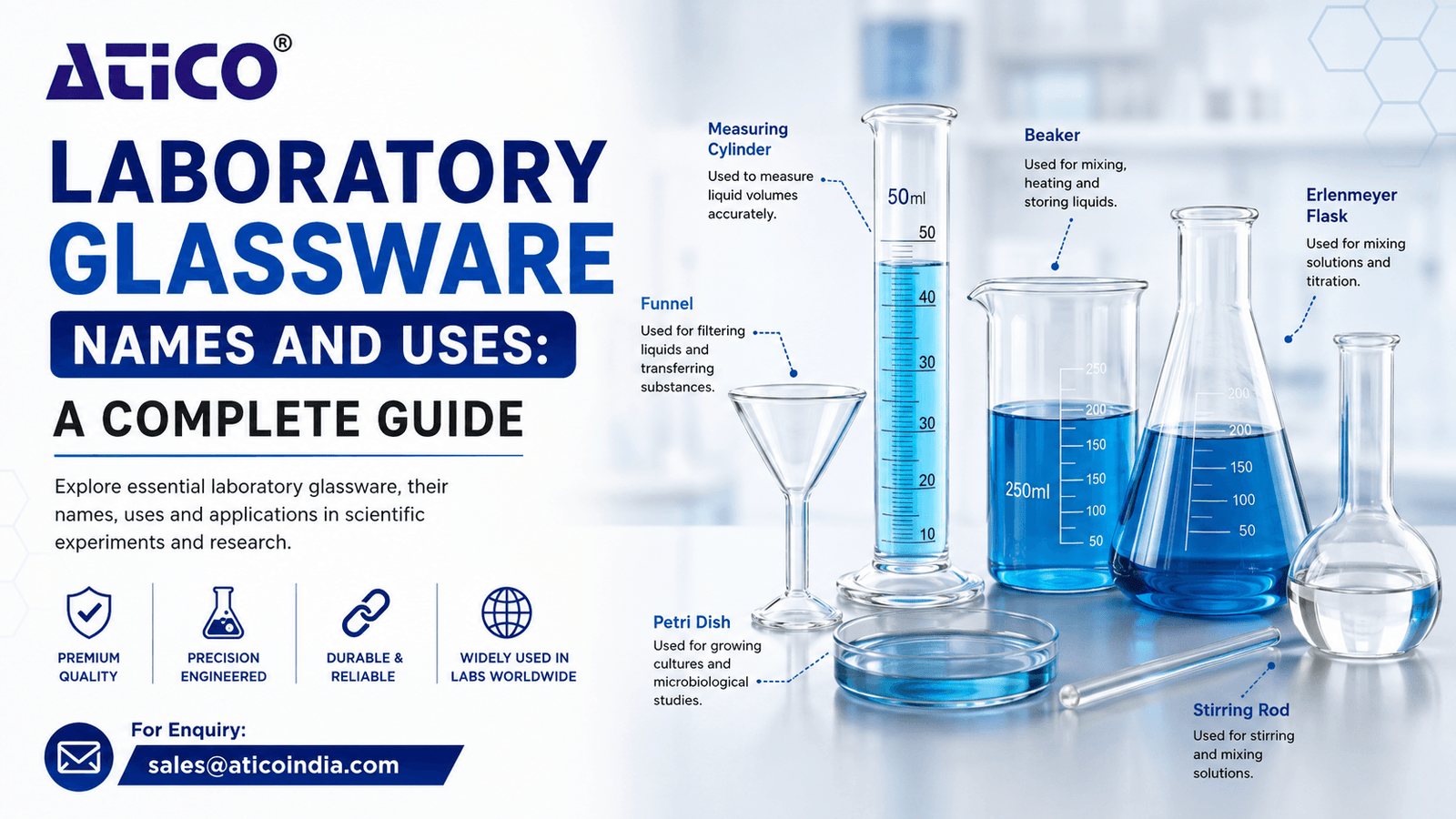
Laboratory glassware plays a crucial role in various lab functions. However, every glassware item is designed for a different purpose. The knowledge of the laboratory glassware names and uses aids laboratories in choosing the right glassware for the right procedure, for the necessary accuracy, and for the working conditions.
We are a laboratory glassware manufacturer, supplier, and exporter. As an internationally accepted laboratory glassware exporter, we always offer a transparent procedure, not a product, when our customers choose glassware. Every product must be able to cater to the specific task for which it is used.
Laboratory Glassware Names and Uses: A Practical List
We are a laboratory glassware exporter, and we apply the understanding necessary to assist our customers in selecting appropriate glassware for specific needs and in building the laboratory. We provide various types of glassware and complete international orders with seamless delivery practices.
The following are some of the laboratory glassware names and uses in various laboratories:
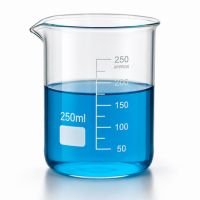
Containers for liquids to be held, mixed, dissolved, and heated. They have a large, wide opening to make stirring and pouring easy. Typically, graduations are only approximate to give volume indications, not measurements.
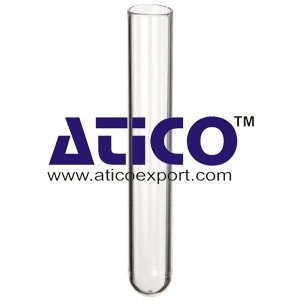
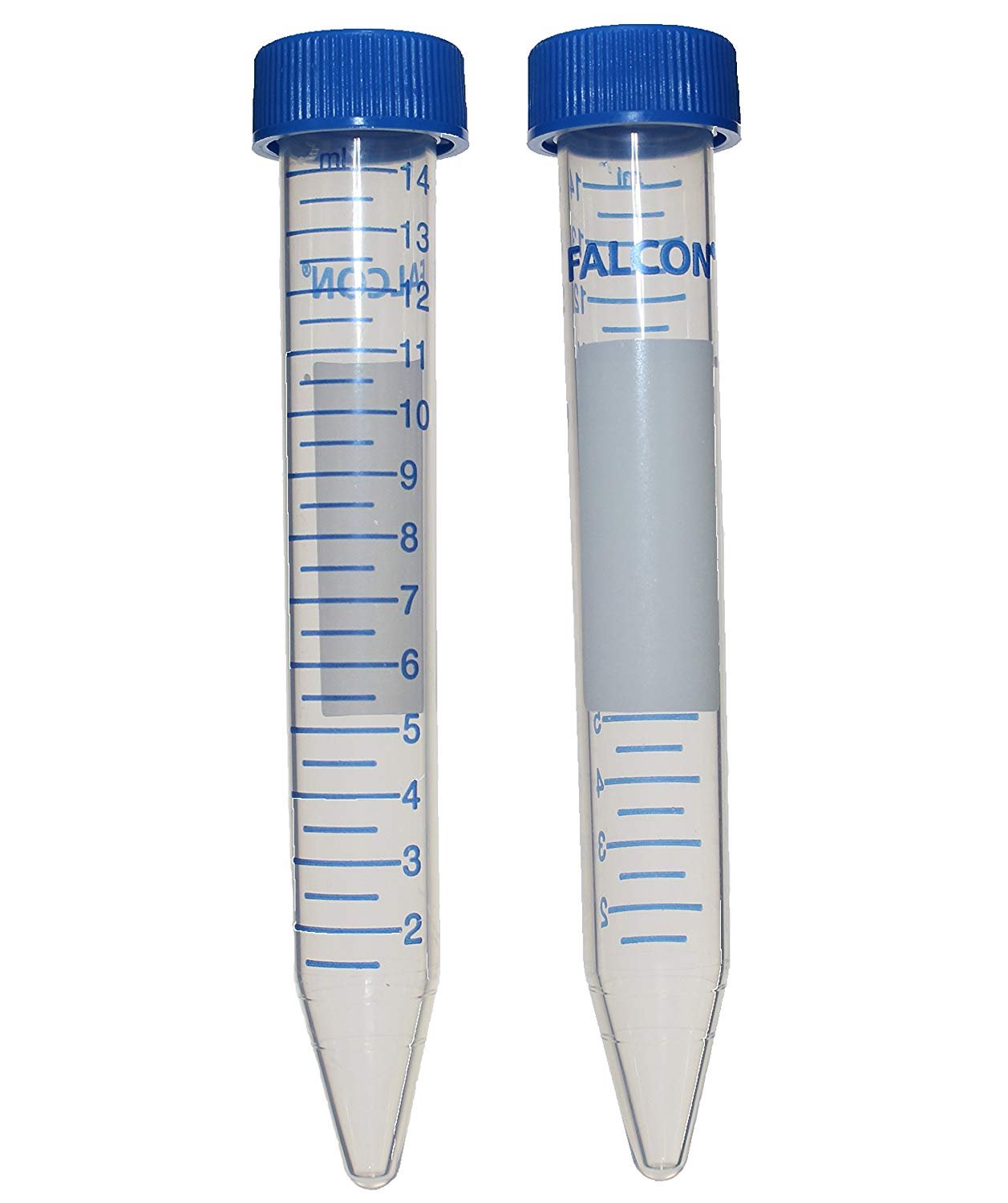
Test Tubes:
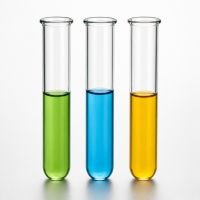
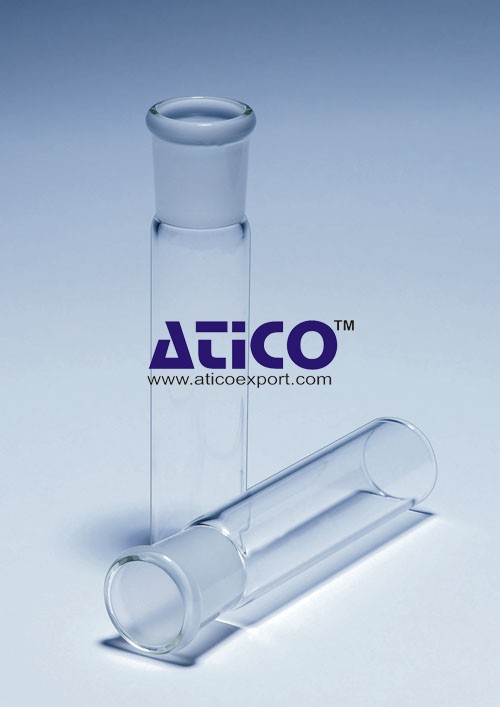
For small-scale reactions, handling samples, qualitative analysis, and heating small amounts of substances. They are especially prevalent in the teaching and routine analytical laboratories.
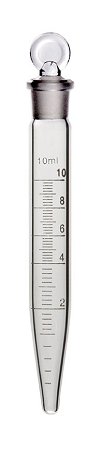
Measuring Cylinders:
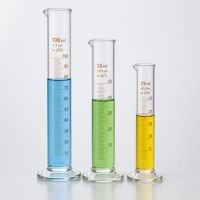
These are used to measure the volume of liquids using measuring scales. They are appropriate when a precise amount is needed, but not for a single-volume calibration such as a volumetric flask.
Conical Flasks:
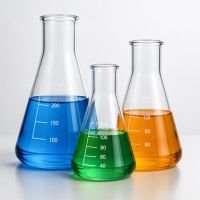
Used for mixing solutions, titration, heating, and sample preparation. They have a wide base and a narrow neck, making it easier to swirl and reducing splashing.
Volumetric Flasks:
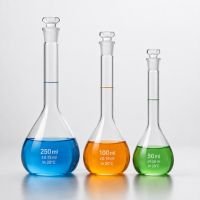
Used for preparing solutions to a specific volume and concentration. They are used in the laboratory for analytical and quantitative applications, and they can be used to introduce a solution into a defined volume.
Pipettes:
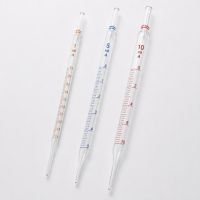
These are used to transfer measured amounts of liquids. Volumetric pipettes are used for a specific volume, and graduated pipettes can be used to measure a different volume that is indicated on the graduation scale.
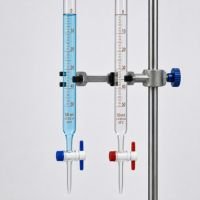
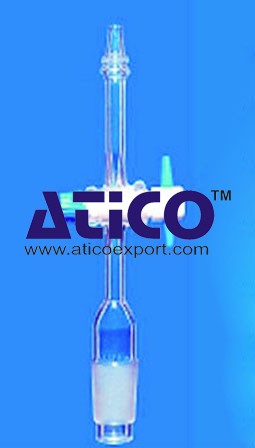
Used for dispensing small quantities of liquid, especially in titration. They are graduation-scaled and have a stopcock that can be used to monitor and regulate the volume of liquid given.
Round-Bottom Flasks:
Used for heating, reflux, distillation, and chemical reactions. They have a curved shape, which assists in relatively uniform heat distribution around the vessel.
Boiling Flasks:
These are used for heating liquids and for laboratory operations that require high temperatures. They can be made in various sizes and heat capacities for laboratory heating use.
Separation Funnels:
Used to separate immiscible liquids in extraction processes. Each liquid layer can be drained in a controlled fashion using the stopcock.
Filter Funnels:
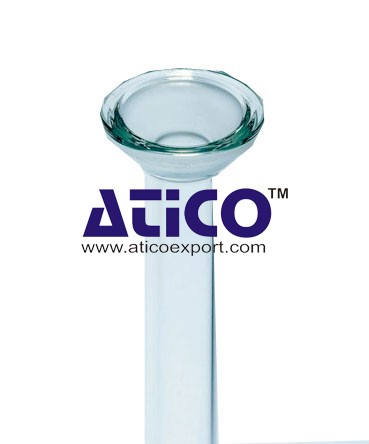
Use for gravity filtration with appropriate filter paper or to transfer liquids to a narrow-necked container.
Condensers:
Condensers cool the vapour and turn it back into liquid. Various condenser designs are chosen depending on the laboratory process.
Reagent Bottles:
Used for storing chemicals, reagents, and prepared solutions. They have the ability to vary in capacities, closures, and designs based on storage needs.
Watch Glasses:
Cover beakers, hold small amounts of substance, and evaporate limited amounts of liquid.
Desiccators:
For protection of samples and materials from atmospheric moisture, especially following a drying procedure.
Dropping Bottles and Wash Bottles:
These are for controlled dispensing of small volumes of liquid and for cleaning or rinsing in the lab.
Knowing that as a laboratory glassware manufacturer, it is not enough to make such products in different capacities and shapes. When making the determination of dimensions, glass quality, surface finish, and overall construction, we take into account the intended laboratory use.
The product-specific considerations are applied throughout the manufacture of the glassware. We are a lab glassware exporter, so as to ensure that it is appropriate for the intended operation in the laboratory. Similarly, this application-based approach is also a crucial point if we are providing a complete range of lab glassware to any laboratory or international buyer as a lab glassware exporter.
Borosilicate glass 3.3 is widely used in laboratory applications owing to its ability to resist heat and chemicals. The specifications of borosilicate glass 3.3 laboratory equipment are outlined in BIS IS 18219:2023, an adaptation of ISO 3585.
Making the Right Choice in Laboratory Glassware
The knowledge about the names and uses of laboratory glassware is useful for making laboratory procurement more practical and applicable. Different types of beakers, test tubes, measuring cylinders, volumetric flasks, pipettes, burettes, funnels, condensers, and storage vessels have different properties and functions, which should be reflected in their design.
We use this principle in the manufacture and supply of our glassware. We do not think of laboratory glassware as just a set of standard containers, but we think of what the glassware must do, how big, what material, how calibrated, and how constructed for each application. This focus enables us to provide stockable products to the laboratories and also enhance our position as a laboratory glassware manufacturer, supplier, and exporter for domestic and international needs.

.jpg)

.jpg)

0 Replies to “Methods of the recruitment”