
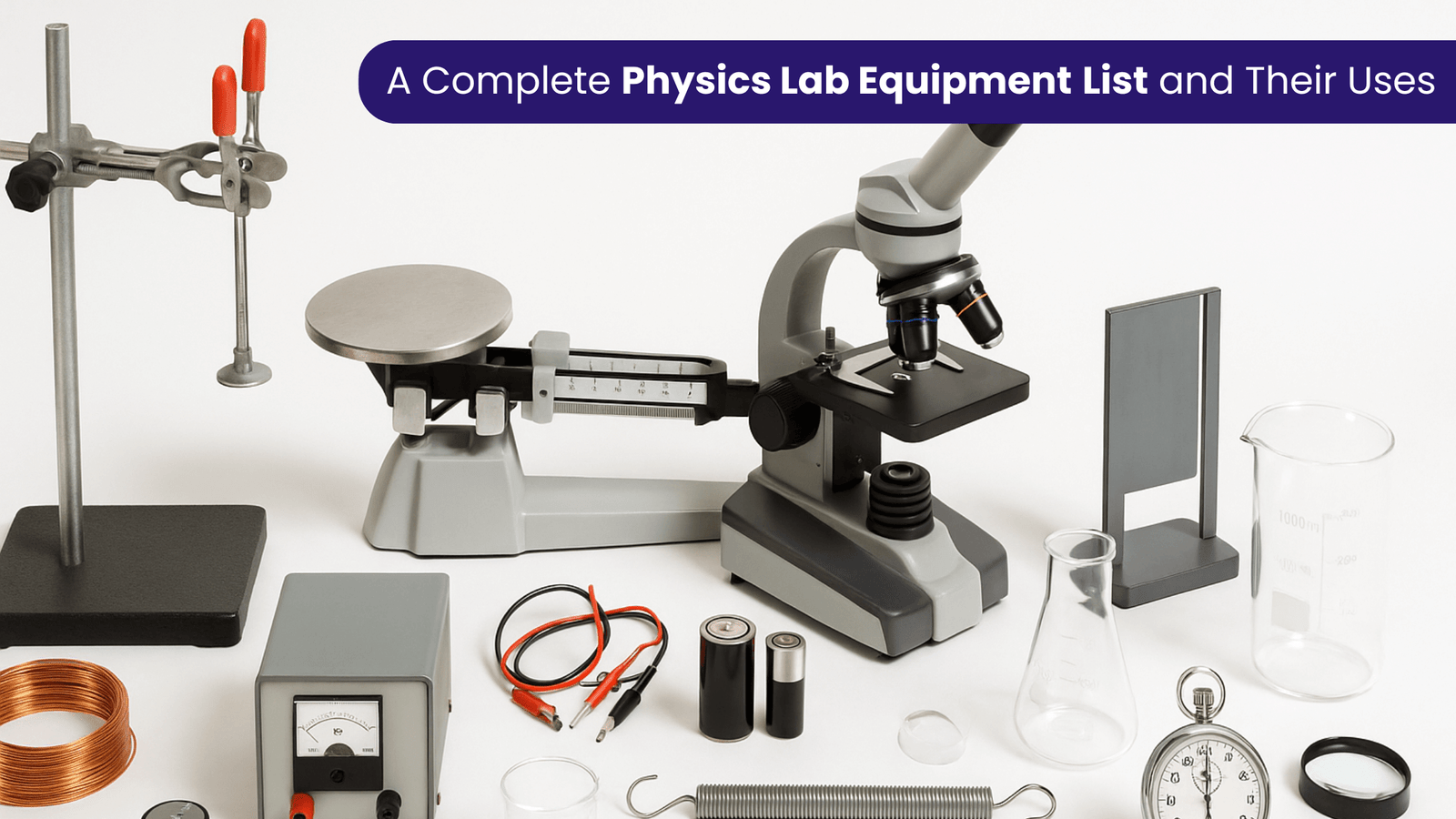
Physics Lab Equipment
Every science department has a physics laboratory at its core. It's the place where theory meets practice, where curiosity leads to discovery. In any educational institution, the appropriate physics laboratory instruments are essential for providing students with meaningful, hands-on learning experiences.
In this blog, we'll discuss the physics lab equipment list — including 15 valuable physics lab equipment items and their uses. While you're setting up a new lab or updating your established lab, consider these classroom materials as a base for your experiments, focusing on mechanics, optics, electricity, and modern physics.
Physics Laboratory Equipment and Their Uses
1.Vernier Caliper
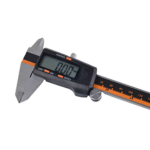
Use: A Vernier Caliper is a high-precision measuring instrument for precise measurement of external and internal dimensions and depths. It is a necessary device to accurately measure lengths and diameters with some experiments requiring a high degree of accuracy, measuring the thickness of a wire or the diameter of a sphere, for example.
2. Screw Gauge (Micrometer)
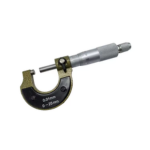
Use: Serial Gauge is a device for extremely small dimensions, which are usually in millimetres or micrometres. It is perfect for any experiment which requires very exact measurements i.e., finding the radius of a very thin wire or the thickness of a very small object.
3. Meter Scale
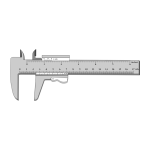
Use: A standard unit of measurement for measuring length or distance in simpler experiments. It is one of the most basic instruments on any list of instruments used in physics experiments, especially mechanics experiments. The meter scale is a vital physics lab equipment name.
4. Simple Pendulum
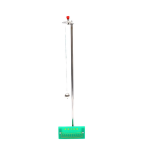
Use: The simple pendulum is a typical experiment that is often used to find the value of the acceleration due to gravity (g) and to analyze the periodic nature of the motion. It is made up of a bob that is tied to a string, and hence, the students get these ideas with the help of its vibrations.
5. Spring Balance
Use: One is a Spring Balance, which measures the force or the weight of the object by means of Hooke’s Law. Such an instrument is often used in mechanics experiments to illustrate the force-extension relationship.
6. Tuning Fork
Use: Each Tuning Fork makes one fixed frequency sound when it is hit. The basic principles of sound, resonance, and vibration are the main areas of study where this tool is used. The students apply the instrument to check the vibration laws of the string and to establish the frequency relations.
7. Prism
Use: A Prism is an optical instrument that is used to understand refraction, dispersion, and deviation of light. It shows the process of white light separation into its component colors—one of the basic experiments of optics.
8. Convex and Concave Lenses
Use: Lenses, along with other lab tools, are basic instruments for conducting physics experiments related to light and image formation. Through these experiments, the learners are able to understand the concepts of focal length, magnification, and the properties of light as it passes through a converging or diverging lens. In the list of physics lab instruments you the convex and concave lenses hold a special place.
9. Mirror (Plane, Concave, Convex)
Use: Mirrors help to study reflection and image formation. They are an essential piece of apparatus in optics experiments that help introduce students to the nature of light when reflected by different surfaces.
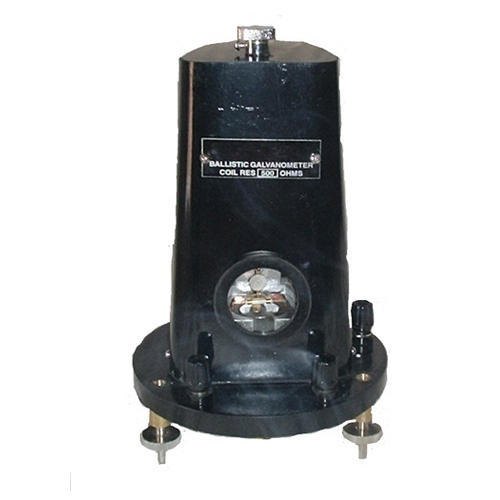
10. Galvanometer
Use: A Galvanometer detects and measures small electric currents. It’s an essential part of electrical experiments and can be converted into an ammeter or voltmeter when needed.
11. Ammeter
Use: An Ammeter measures the current flowing through a circuit. It is a fundamental electrical measuring device found in almost every physics lab equipment list and is used to verify Ohm’s Law and study current flow in series and parallel circuits.
12. Voltmeter
Use: Used to measure potential difference (voltage) between two points in an electrical circuit. It is commonly paired with an ammeter to understand the relationship between voltage and current in electrical experiments.
13. Rheostat
Use: A Rheostat controls the flow of electric current in a circuit by varying resistance. It helps in experiments that study the effect of current and resistance on circuit performance.
14. Stopwatch
Use: A Stopwatch is used to measure time intervals accurately during experiments, such as oscillations of a pendulum or free-fall motion. It ensures precision when calculating time-dependent physical quantities.
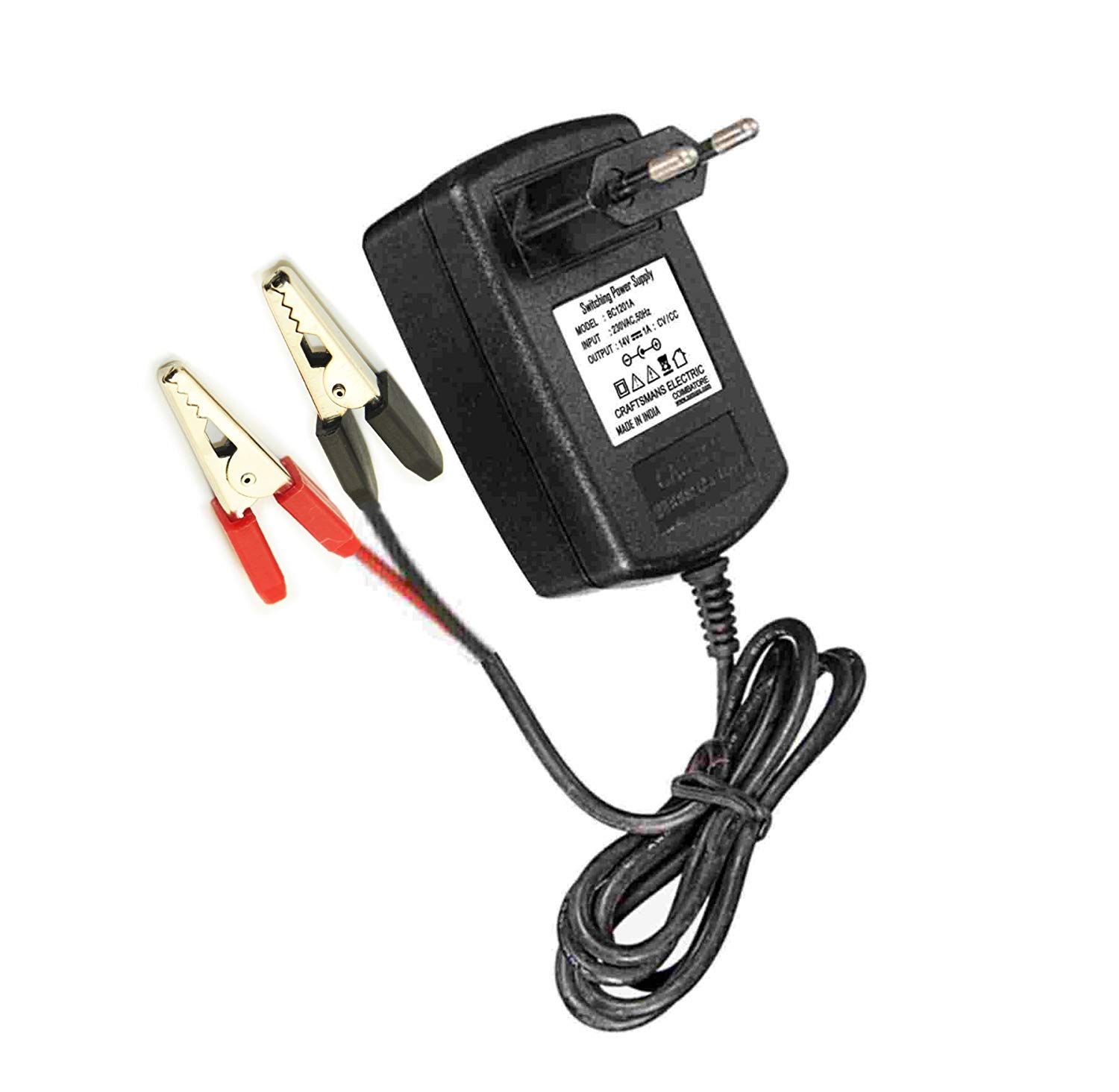
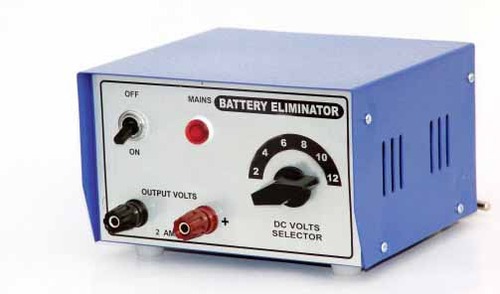
15. Battery Eliminator / DC Power Supply
Use: This apparatus provides a constant source of DC voltage to power electrical experiments safely. It replaces batteries in circuits and allows adjustment of voltage levels as needed.
Additional Common Physics Lab Equipment Names
While the above 15 are the most commonly used, other useful physics laboratory instruments include:
- Resistance Boxes
- Multimeters
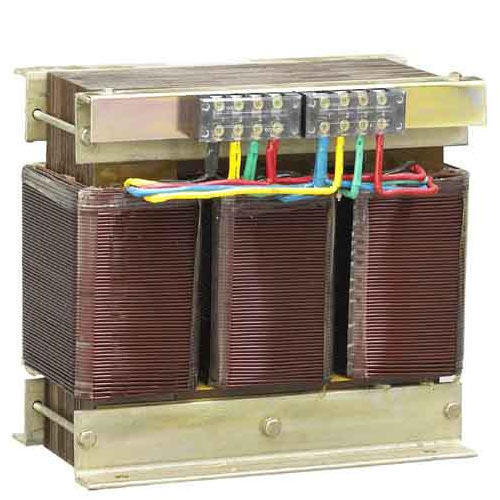
- Transformers
- Spectrometers
- CRO (Cathode Ray Oscilloscope)
- Bar Magnets
- Electromagnets
- Optical Benches
These physics lab instruments enhance the overall functionality of a physics laboratory, enabling advanced experimentation and analysis.
Physics Laboratory Instruments Tender Supply
Atico offers complete physics lab equipment lists customized to school, college, and research-level requirements, as a reliable physics lab equipment manufacturer and supplier. They ensure:
- ISO-certified instruments
- Durable materials and precise calibration
- After-sales support and installation assistance.
- Affordable pricing for bulk or institutional orders
By choosing the right manufacturer, institutions can build laboratories that meet global standards for scientific education.
Conclusion
A functional and modern physics laboratory is essential for scientific learning. The physics lab equipment list discussed above covers the 15 most important physics laboratory instruments that help students explore core principles of mechanics, optics, electricity, and motion.
Understanding physics lab apparatus and their uses not only enhances academic performance but also nurtures curiosity, experimentation, and innovation — the true essence of science education.
Whether you’re setting up a new lab or upgrading an existing one, investing in high-quality physics lab equipment and instruments ensures a future-ready learning environment for every budding physicist.

0 Replies to “Methods of the recruitment”