
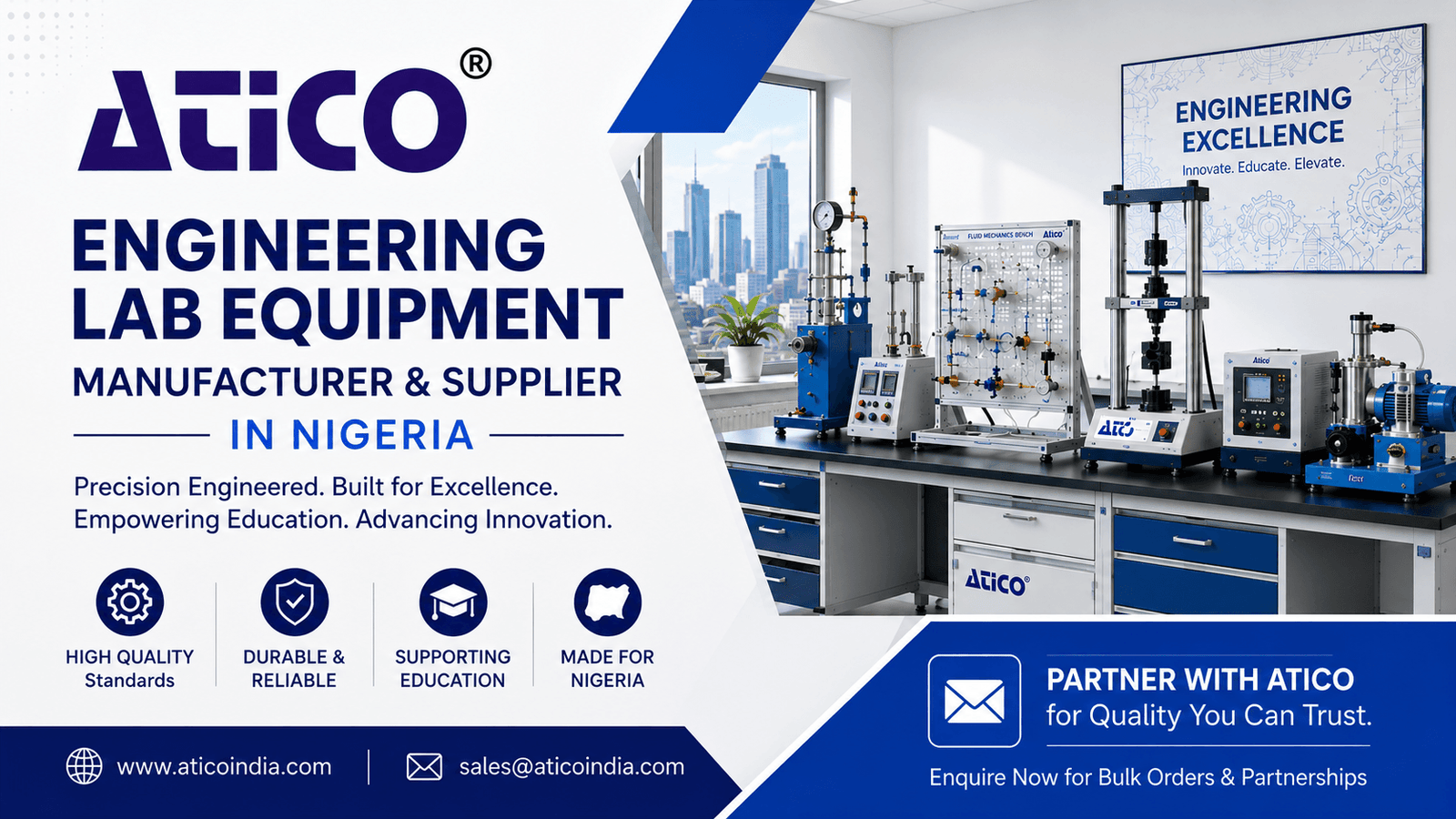
Nigeria's engineering education sector is at a genuinely critical juncture. With over 170 federal and state polytechnics, universities of technology, and NBTE-affiliated technical colleges, the country produces more than 100,000 engineering graduates annually, yet employer surveys consistently report that a significant share arrive without hands-on laboratory experience. The bottleneck is almost always the same: inadequate, outdated, or incomplete engineering lab equipment.
For principals, procurement officers, heads of department, and TETFund project managers navigating this gap, the central question is not whether to invest in engineering lab equipment — it is which manufacturer and supplier to trust with an investment that will define a laboratory's capability for the next decade.
This guide is written for that decision.
Why Nigeria's Engineering Labs Need a Manufacturer, Not Just a Supplier
The distinction matters practically, not just on paper. A distributor or trading company sources from whoever is cheapest at the time of your order. A manufacturer controls production, which means they control specifications, customization, lead times, and the availability of spares years after the initial purchase.
For Nigerian institutions specifically, this distinction becomes acute (meaning: having a sharp or severe effect; critically important at a specific moment) at three points in the procurement cycle:
At the specification stage. NBTE-accredited engineering programs require equipment that meets specific performance criteria. A manufacturer can build to those criteria and document compliance. A reseller can only pass along whatever the original manufacturer chose to specify — and often cannot answer technical questions about it.
At the customization stage. Nigerian polytechnics and universities of technology frequently need non-standard configurations, a soil testing setup calibrated to Nigerian Standard specifications, a power electronics trainer configured for the specific experiments in their syllabus, a fluid mechanics bench sized for a particular lab footprint. Manufacturers accommodate these requests. Resellers cannot.
At the after-sales stage. Nigeria's import logistics are among the most complex in West Africa. When a component fails two years after installation, the institution that bought from a manufacturer has a direct technical relationship with the production source. The institution that bought from a reseller has a phone number that may or may not still work.
What a Complete Engineering Lab Equipment Setup Covers in Nigeria
Nigerian engineering programs — whether at federal polytechnics, state universities of technology, or NBTE-affiliated technical colleges — typically require equipment across five to six core disciplines. A credible engineering lab equipment manufacturer in Nigeria should cover all of them:
Civil engineering laboratory: This is typically the most capital-intensive engineering lab in a Nigerian polytechnic. A complete civil engineering lab includes soil testing equipment covering compaction, CBR, shear, and consolidation tests; aggregate testing apparatus; cement and concrete testing equipment; bitumen testing kits for highway engineering; survey instruments; and material testing machines including universal testing machines and Rockwell hardness testers. Nigerian civil engineering programs have specific requirements around road construction and geotechnical investigation that inform the equipment specification.
Electrical engineering laboratory: Electrical machines benches covering motors, generators, and transformers; power electronics trainer kits for converters, inverters, and rectifiers; circuit and network trainers; measurement instrumentation including digital multimeters, oscilloscopes, and function generators; control system trainers; and educational machine cut-models for demonstration purposes.
Mechanical engineering laboratory: Fluid mechanics and hydraulics benches, thermodynamics apparatus, heat transfer equipment, theory of machines apparatus, internal combustion engine cut-models, refrigeration and air conditioning trainers, and material testing equipment. Mechanical engineering labs in Nigerian institutions also increasingly include renewable energy demonstration equipment, reflecting the country's energy transition priorities.
Electronics and communication laboratory: Analog and digital electronics trainers, communication system trainers covering analog, digital, and microwave systems, fiber optic trainers, embedded systems and microprocessor trainers, and instrumentation trainer kits.
Chemical engineering laboratory. Mass transfer and momentum transfer equipment, unit operations apparatus, process control technology trainers, and biochemical engineering setups. Chemical engineering is a significant discipline in Nigerian polytechnics, given the country's petrochemical and industrial processing sector.
Supporting equipment across all disciplines. Laboratory furniture, safety equipment, storage systems, laboratory glassware in borosilicate 3.3 specification, microscopes for relevant disciplines, and interactive demonstration systems.
A mid-scale Nigerian polytechnic engineering lab project typically involves 300–600 distinct line items across these disciplines. Procurement teams that attempt to source across multiple vendors quickly discover that vendor coordination, documentation management, and freight consolidation consume more institutional resources than the equipment itself cost.
Engineering Lab Equipment List for Nigerian Institutions
A complete engineering lab equipment list for a Nigerian polytechnic or university of technology spans multiple disciplines. Below is a comprehensive (meaning: complete, covering all aspects thoroughly) reference list — organized by discipline — that procurement officers and HODs can use as a starting framework when preparing bills of quantities for TETFund submissions or NBTE accreditation.
1. Civil Engineering Lab Equipment List
Civil engineering is typically the largest and most capital-intensive lab in any Nigerian polytechnic. A standard civil engineering lab equipment setup includes:
Soil Testing Equipment
- Proctor Compaction Apparatus (Standard and Modified)
- California Bearing Ratio (CBR) Test Apparatus
- Direct Shear Apparatus
- Consolidation Apparatus (Oedometer)
- Triaxial Shear Test Apparatus
- Liquid Limit and Plastic Limit Test Set
- Hydrometer Analysis Set
- Sieve Analysis Set (soil)
Aggregate Testing Equipment
- Los Angeles Abrasion Testing Machine
- Aggregate Impact Value Apparatus
- Aggregate Crushing Value Apparatus
- Flakiness and Elongation Index Gauges
- Sieve Shaker with Sieves
Cement and Concrete Testing Equipment
- Vicat Apparatus (setting time)
- Blaine Air Permeability Apparatus (fineness)
- Concrete Cube Moulds
- Slump Cone Apparatus
- Compression Testing Machine
- Flexural Testing Machine
Bitumen Testing Equipment
- Penetration Test Apparatus
- Softening Point Apparatus (Ring and Ball)
- Ductility Testing Machine
- Flash and Fire Point Apparatus
- Viscometer (Saybolt and Redwood)
Survey Instruments
- Theodolite (Digital and Optical)
- Total Station
- Automatic Level
- Levelling Staff
- Measuring Tapes and Chains
- GPS Survey Equipment
Material Testing Machines
- Universal Testing Machine (UTM) — tensile, compressive, bending tests
- Rockwell Hardness Tester
- Brinell Hardness Tester
- Impact Testing Machine (Charpy and Izod)
2. Electrical Engineering Lab Equipment List
A standard electrical engineering lab equipment setup for Nigerian polytechnics includes:
Electrical Machines
- DC Motors (Series, Shunt, Compound)
- DC Generators
- Single-Phase and Three-Phase Transformers
- Induction Motors (Single-Phase and Three-Phase)
- Synchronous Machines
- Educational Motors and Machines cut-models
Power Electronics
- Power Electronics Trainer Kit - SCR, TRIAC, MOSFET, IGBT circuits
- AC/DC Converters Trainer
- DC/DC Chopper Trainer
- Inverter Trainer
- Controlled Rectifier Trainer
Measurement and Instrumentation
- Digital Multimeters
- Digital Storage Oscilloscopes
- Function/Signal Generators
- DC Power Supplies
- Frequency Counters
- LCR Meters
- Spectrum Analyzers
Control Systems
- Control System Trainer Kit
- PLC Trainer
- Process Control Trainer
- Servo Motor Trainer
Circuit Trainers
- Circuit and Network Trainer
- Analog Electronics Trainer
- Digital Electronics Trainer
- Breadboard Trainer Kits
3. Mechanical Engineering Lab Equipment List
A standard mechanical engineering lab equipment setup includes:
Fluid Mechanics and Hydraulics
- Bernoulli's Theorem Apparatus
- Reynolds Number Demonstration Apparatus
- Venturimeter and Orifice Meter Apparatus
- Centrifugal Pump Test Rig
- Francis Turbine Test Rig
- Pelton Wheel Test Rig
- Flow Measurement Apparatus
Thermodynamics and Heat Transfer
- Heat Conduction Apparatus (Linear and Radial)
- Heat Convection Apparatus (Natural and Forced)
- Heat Radiation Apparatus
- Stefan Boltzmann Apparatus
- Boyle's Law Apparatus
- Refrigeration and Air Conditioning Trainer
- Marcet Boiler
Theory of Machines
- Motorized Gyroscope
- Cam Analysis Machine
- Whirling of Shaft Apparatus
- Balancing of Rotating Masses Apparatus
- Governor Apparatus (Watt, Porter, Proell)
- Gear Train Apparatus
Internal Combustion Engines
- IC Engine Cut Models — Petrol and Diesel
- Fuel Supply System Models
- Engine Test Rig (single cylinder)
Material Testing (shared with Civil)
- Universal Testing Machine
- Rockwell and Brinell Hardness Testers
- Impact Testing Machine
4. Electronics and Communication Lab Equipment List
A standard electronics and communication lab setup includes:
Electronics Trainers
- Analog Electronics Trainer Kit
- Digital Electronics Trainer Kit
- Embedded Systems and Microprocessor Trainer
- Breadboard and Component Trainer Kits
- Robotic Kits
Communication Systems
- Analog Communication Trainer
- Digital Communication Trainer
- Fiber Optic Trainer Kit
- Microwave Test Bench
- Antenna and Satellite Trainer
Instrumentation
- Instrumentation Trainer Kit
- Data Acquisition System
- Transducer and Sensor Trainer
5. Chemical Engineering Lab Equipment List
A standard chemical engineering lab equipment setup includes:
Mass Transfer Equipment
- Distillation Column (Plate and Packed)
- Liquid-Liquid Extraction Unit
- Absorption Column
- Humidification and Dehumidification Unit
Momentum Transfer Equipment
- Pipe Flow Friction Apparatus
- Centrifugal Pump Characteristics Unit
- Fluidization Unit
Heat Transfer Equipment
- Heat Transfer Lab Equipment — shell and tube, double pipe, plate heat exchangers
- Evaporator Unit
- Dryer Unit (Tray and Rotary)
Process Control
- Process Control Technology Trainer
- PID Controller Trainer
- Level, Flow, Temperature and Pressure Control Trainers
Biochemical Engineering
- Bioreactor / Fermenter Unit
- Biochemical Engineering Lab Setup
Supporting Lab Glassware
- Beakers, Flasks, Burettes, Condensers — borosilicate 3.3 grade
- Fume Hood
- Laboratory Furniture and Safety Equipment
6. Supporting and Shared Equipment
Across all engineering disciplines, the following shared equipment is typically required:
| Equipment | Category |
|---|---|
| Digital Multimeters | Measurement |
| Oscilloscopes | Measurement |
| DC Power Supplies | Measurement |
| Laboratory Furniture (benches, stools, shelving) | Infrastructure |
| Safety Equipment (fire extinguishers, first aid, PPE) | Safety |
| Fume Hoods | Chemical/Safety |
| Interactive Whiteboards | Instruction |
| Storage Cabinets | Infrastructure |
How to Use This List for TETFund and NBTE Procurement
This engineering lab equipment list serves as a starting framework not a final bill of quantities. Before submitting to TETFund or preparing for NBTE accreditation review, each institution should:
Map every item against the specific courses and experiments in their approved curriculum. Add technical specifications for each item — material grade, capacity, accuracy class, applicable standard. Confirm SONCAP requirements for applicable electrical and electronic equipment. Get written lead times and spares availability from the manufacturer before finalizing the order. Submit the bill of quantities in the format specified by TETFund's project office — not a generic list.
Atico India provides a customized equipment list and bill of quantities mapped to your institution's specific NBTE-accredited syllabus at no charge with every formal inquiry. Write to sales@aticoindia.com with your institution name, program, and accreditation level to receive a structured equipment proposal.
Why Indian Manufacturers Are the Preferred Source for Nigerian Engineering Labs
Nigeria's engineering education procurement history has run through several sourcing models — local fabrication, European suppliers, Chinese manufacturers, and increasingly, Indian manufacturers. The shift toward Indian engineering lab equipment manufacturers is not accidental. It reflects a practical calculation that Nigerian procurement officers have made repeatedly:
Indian manufacturers produce to internationally recognized standards — ISO, ASTM, IS — at price points that European suppliers cannot match and with quality consistency that budget-tier Chinese suppliers frequently do not deliver. Indian manufacturers also understand the specific equipment requirements of Commonwealth-influenced engineering curricula, which Nigerian NBTE-accredited programs largely follow. The syllabus alignment is genuine, not forced.
Atico India has been manufacturing and exporting engineering lab equipment to Nigerian institutions for years, supplying civil, electrical, mechanical, electronics, and chemical engineering labs to polytechnics, universities of technology, and technical colleges across the country. The manufacturing base in India allows full production control — from raw material specification through final quality inspection — with export documentation, freight consolidation, and customs support for Nigerian ports including Apapa and Tin Can in Lagos and the Port Harcourt terminal.
Nigeria-Specific Procurement Realities Every Buyer Should Know
Buying engineering lab equipment for a Nigerian institution is not a generic procurement exercise. Several country-specific factors shape how the process should be managed:
TETFund procurement cycles. The Tertiary Education Trust Fund remains the primary funding mechanism for engineering lab equipment in federal and state polytechnics and universities. TETFund disbursements follow specific approval and utilization timelines. Suppliers who understand the TETFund documentation requirements — including the specific format for bills of quantities, technical specifications, and delivery schedules — can help institutions meet compliance requirements rather than creating additional administrative burden.
Bureau of Public Procurement compliance. Public institutions are governed by the BPP Act. Procurement of engineering lab equipment above threshold values requires competitive bidding, technical evaluation, and specific documentation. A supplier who has navigated this process with Nigerian institutions before is significantly less likely to create compliance problems mid-project.
Port documentation requirements. Importing engineering lab equipment through Lagos or Port Harcourt requires Form M, Pre-Arrival Assessment Report (PAAR), and SONCAP certification for applicable equipment categories. A manufacturer who handles export documentation and is familiar with Nigerian port requirements reduces the risk of clearance delays that can add weeks to project timelines.
Naira payment and pricing stability. Given Nigeria's currency environment, institutions and procurement officers should clarify payment currency, exchange rate reference points, and pricing validity periods explicitly in the purchase order. A manufacturer with established Nigerian export operations will have clear policies on these points.
Installation and commissioning in-country. Engineering lab equipment — particularly civil engineering testing machines, fluid mechanics benches, and power electronics trainers — requires proper installation and commissioning. Either the manufacturer provides technicians or supplies sufficiently detailed installation documentation for local technical staff to complete the work. This should be confirmed in writing before the order is placed, not discovered after the equipment arrives.
What Nigerian Institutions Should Demand Before Signing
A procurement officer evaluating an engineering lab equipment manufacturer or supplier for a Nigerian institution should require the following in writing before comparing prices:
A detailed bill of quantities mapped to the institution's specific NBTE-accredited syllabus. Written technical specifications for every item, citing applicable international standards. Confirmation of SONCAP compliance or exemption status for all applicable equipment categories. Export documentation capability, including Form M support, PAAR documentation, and freight consolidation to Nigerian ports. Installation and commissioning plan — either manufacturer technicians or detailed in-country documentation. Warranty terms with explicit coverage period, claims process, and spare parts availability commitment. Named after-sales technical contact with documented response time.
A supplier who addresses all seven without hesitation is a supplier prepared for the Nigerian procurement environment. One who hedges on any of them is passing the risk back to the institution.
The Bottom Line
Selecting an engineering lab equipment manufacturer and supplier in Nigeria is ultimately a decision about institutional accountability. The equipment will be used by students for a decade or more. It will be inspected by NBTE accreditation teams. It will need spares, calibration, and occasionally technical support. The manufacturer who controls production, understands Nigerian procurement requirements, and maintains a direct technical relationship with the institution after delivery is the supplier worth a long-term relationship.
Equip the lab once, with a manufacturer who will still be answering the phone in year seven.
Atico India is a manufacturer and global supplier of engineering lab equipment, serving polytechnics, universities of technology, and technical colleges in Nigeria and across worldwide markets. Our product range covers civil engineering lab equipment, electrical engineering lab equipment, mechanical engineering lab equipment, chemical engineering lab equipment, and vocational training lab equipment. To request a tender quotation for your institution, visit aticoindia.com or write to sales@aticoindia.com.


0 Replies to “Methods of the recruitment”